年老 old / elderly
lǎo 现代普通话 Modern MandarinAI 合成语音 AI-generated voice
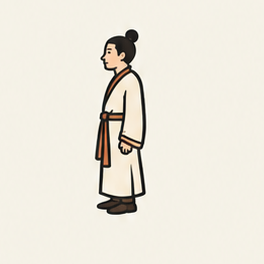
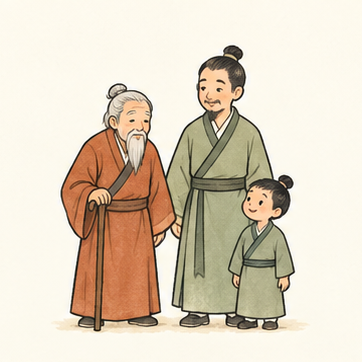
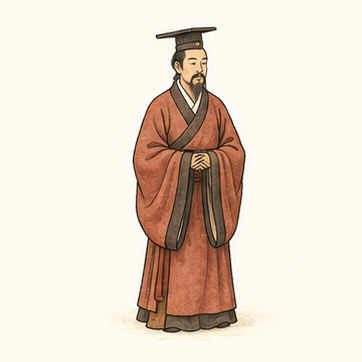
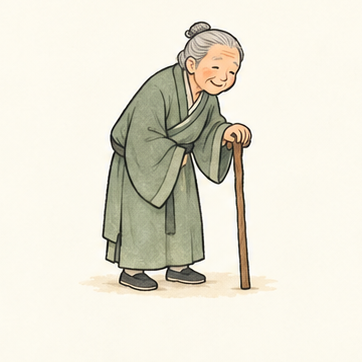
早期「老」像背部弯曲、头发较长、手持拐杖的人,表示老人。 Early 老 depicts a bent-backed person with long hair and a walking stick. The figure represents an elderly person.
分类依据 Why these classifications?
传统六书分类可以交叉。前四类描述构形,假借与转注涉及用字或字词关系。标签可能对应不同历史或现代字形。问号表示暂定或传统解释;打开汉字可查看依据。 The six traditional classifications (六书) overlap. The first four describe construction; loangraphs and derivative cognates concern use or relationships. Tags may refer to different historical or modern forms. A question mark flags a provisional or traditional interpretation; open a character for its evidence.
象形 Pictographs 老
有来源支持的分析 Source-supported analysis早期字形像长发、弯背、持杖的老人,因此按图像构形归入象形。
Early forms depict an older person with long hair, a bent back, and a staff. This explains the pictographic classification of the form.
参考资料 References: [1]转注 Derivative cognates 老/考
传统分析 Traditional analysis许慎以老、考为转注的传统例子。此标签说明字词之间的关系;转注的具体范围至今仍有不同解释。
Xu Shen gives 老 and 考 as his traditional example of derivative cognates. This labels a relationship between words/graphs; the exact scope of 轉注 remains disputed.
参考资料 References: [1][2]
中间形态是教学示意,并非已证实的古代字形。 Intermediate shapes are teaching illustrations, not attested ancient glyphs.
所选字形 THE SELECTED FORM
词义示意图 Meaning illustration
早期「老」像背部弯曲、头发较长、手持拐杖的人,表示老人。 这幅图介绍词义或关系,并不是对最早字形的摹写。 Early 老 depicts a bent-backed person with long hair and a walking stick. The figure represents an elderly person. This picture introduces the meaning or a relationship, not a transcription of the earliest graph.
把整个故事放在眼前。 The whole story, in view.
点击任一字形或连接 Choose any form or connection早期字形 EARLY FORMS
现代字形规范 MODERN CONVENTIONS
这是帮助学习的关联总览,并非连续的历史时间线;完整动画串联所选字例,最后呈现简体字;有出处的字形、异体与证据空缺均予保留。 This is a learning view, not a continuous historical timeline; the full animation connects selected examples and ends with the simplified character; sourced forms, variants, and evidence gaps remain visible.
练习书写 Practice writing
练习选项 Practice options
用鼠标、手指或触控笔书写。 Use a mouse, finger, or stylus. 请在练习板外滑动页面。 Scroll outside the pad to move the page.
临时练习,笔迹不会保存或上传。 Practice is temporary; strokes are not saved or uploaded.
再细看 · 来源、问问仓颉与认字小活动 Look closer · sources, Ask Cangjie & a little recall+
 原创教学插图
Original teaching illustration
词义示意图 Meaning illustration
早期「老」像背部弯曲、头发较长、手持拐杖的人,表示老人。 这幅图介绍词义或关系,并不是对最早字形的摹写。 Early 老 depicts a bent-backed person with long hair and a walking stick. The figure represents an elderly person. This picture introduces the meaning or a relationship, not a transcription of the earliest graph.
今天字形下部与早期人形所持的杖有关,不必把它另当作一个物体来解释。 The modern lower component developed from the stick in the early figure; it need not be read as a separate object.