字集名字背后的故事 THE NAME BEHIND THE COLLECTION
仓颉 Cangjie
Cāngjié现代普通话 Modern Mandarin
传说中的造字史官 The legendary historian and creator of Chinese writing
仓颉被尊为黄帝——中国历史与神话传说中的一位君主——的史官、文字始祖,也是道教传统中的文字之神。传说讲述了他整理文字、洞察万物的非凡能力;另有一支传说将他称为统治者仓帝。 Cangjie is revered as Huangdi (the Yellow Emperor, a legendary sovereign in Chinese history and mythology)'s official historian, an ancestor of Chinese writing and the God of Writing in Daoist tradition. Legends describe his work organizing written characters and his extraordinary perception; another tradition presents him as the ruler Cangdi.
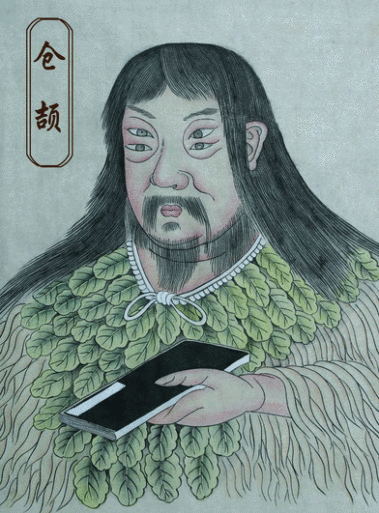
四目形象承袭汉代文献中神化仓颉的样貌记述。 The four-eyed appearance follows descriptions of a deified Cangjie in Han-era texts.
01
传说中的生平 His life in tradition
流传的生平叙事有两支:一支称他为黄帝史官,另一支称他为部落首领仓帝。史官说以仓颉为“左史”、沮诵为“右史”;部落首领说则有另一套背景与纪年。 Two strands of his life story survive: Huangdi (the Yellow Emperor)’s historian, and a clan leader called Cangdi (Emperor Cang). In the historian account, Cangjie serves as the 'Left Historian' and Jusong as the 'Right Historian'. The leader account gives him another setting and chronology.
- 时代 Era
- 五帝时期 · 传说 Five Emperors era · in tradition
- 生年 Birth year
- 约公元前4667年 · 推算 c. 4667 BCE · inferred
- 卒年 Death year
- 公元前4596年 · 仓帝说 4596 BCE · Cangdi account
- 记载中的身份 Role in the accounts
- 黄帝左史;另有仓帝说 Huangdi’s left historian; Cangdi in another account
- 后世记述中的称谓 Names in later tradition
- 侯冈氏;名颉;史皇氏;仓圣 Hougang; Jie; Shihuang; Cangsheng
- 传世功绩 Remembered achievement
- 搜集、整理符号,创制文字 Gathering and organizing signs into writing
按仓帝说,将卒年前4596年与享年71相加,可估算其约生于公元前4667年。具体生卒日期,以及年龄采用周岁还是传统虚岁,原文均未交代。 For the Cangdi account, adding the reported age of 71 to 4596 gives an estimated birth year of 4667 BCE. The exact dates and whether age was counted in completed or traditional nominal years are unspecified.
部落首领说记其前4637年即位、前4596年卒,在位42年、享年71岁;另有引文记“治百有一十载”。生年未明列,辞典中的一般记述则将生卒年列为不详。 The clan-ruler account gives 4637 BCE as his first reign year and 4596 BCE as his death year, with 42 years of rule and an age of 71. Another passage describes a 110-year rule. No explicit birth year is given; general dictionary accounts leave his life dates unknown.
02
故事与成就 His story and achievements
史官的记事之责 A historian seeking a clearer record
一则轶闻从仓颉为黄帝记录牲畜、粮食的数量讲起。彩绳与绳结渐渐难以辨识;看到猎人凭足迹辨认野兽,他得到启发:可以用各具特征的符号代表不同事物。黄帝随后命他向各部落传授这种方法。 One anecdote begins with Cangjie recording the quantities of livestock and grain for Huangdi. Colored cords and knots eventually become hard to interpret. Watching hunters identify animals by their tracks inspired him: distinctive symbols could represent different things. Huangdi then asks him to teach the method to the various tribes.
从万物之迹到文字 From the tracks of nature to written signs
《说文》(最早的综合性汉字字源字典)的记述讲到他的观察与领悟:鸟兽足迹各有特征,可以凭这些特点加以区分。后世传说将这种观察扩展到日月星辰、山川与生灵。仓颉的造字事业,因而成为一个将细心观察化为他人可以辨认、学习与传承之符号的故事。 The Shuowen (the oldest comprehensive Chinese etymological dictionary) account describes his observation and insight: the tracks of birds and beasts have distinct characteristics, allowing them to be distinguished from one another. Later legends extended this observation to the sun, moon, stars, mountains and living things. Thus, Cangjie’s creation of writing became a story of transforming careful observation into symbols that others can recognize, learn and pass on.
汇集符号,整理成文 Gathering signs, shaping a shared script
仓颉的功绩被概括为广泛搜集民间已有的图画符号,将异体殊形加以整理,使之成为规范而有条理的系统。他的成就包括搜集、系统整理文字符号,传授文字,并推广识字。他代表了众多文字创造者,承载着中国先民共同的创造力与智慧。 Cangjie is credited with the extensive collection of existing pictorial symbols from folk traditions and organizing their diverse forms into a standardized and coherent system. His achievement includes collecting and systematizing written symbols, teaching them, and promoting literacy. He represents the many creators of writing, embodying the collective ingenuity and wisdom of China's early ancestors.
仓帝与灵龟负书 Cangdi and the turtle bearing a book
在另一支部落首领传说中,仓颉以阳武为都,号仓帝。他南巡至阳虚山、洛水一带,遇到背负神秘纹理的灵龟;拜受洛书(即“洛水之书”),这次相遇成为他获得汉字创造灵感的另一种起源故事。 According to another legend in the clan-ruler tradition, Cangjie establishes his capital at Yangwu and takes the title Cangdi (Emperor Cang). On a southern journey to Mount Yangxu and the Luo River, he encounters a sacred mystical tortoise bearing mysterious patterned markings. He receives the Luoshu (the Luo River Scroll), and this encounter becomes an alternative origin story of how he finds inspiration for his creation of Chinese writing.
凤凰与独特的蹄印 The phoenix and a distinctive footprint
另一则故事说,凤凰将一件带有蹄印的物品落在仓颉面前,猎人辨出那是神兽貔貅的足迹。这次相遇启发他观察周围万物各自的特征,将其化为能够辨认的符号。新郑的凤凰衔书台与这则传说相联系。 Another story recounts that a phoenix drops an object bearing a hoofprint before Cangjie. A hunter identifies it as the track of the mythical beast Pixiu. The encounter inspired Cangjie to observe the distinctive characteristics of all things in the world around him and turn them into recognizable symbols. The Phoenix Holding Script Platform in Xinzheng is associated with this legend.
多地传承,共同的文祖 Many places, a shared cultural ancestor
中国多地均有仓颉故里说,如河南南乐吴村、陕西白水阳武村等。这些地方的仓颉庙、墓与造字台保存着各自的地方传说,共同表达了对汉字始祖仓颉的尊崇。 Various locations in China, such as Wucun in Nanle, Henan, and Yangwu Village in Baishui, Shaanxi, lay claim to being the hometown of Cangjie. The Cangjie temples, tombs, and Character Creation Platforms found in these places preserve distinct local legends, while collectively expressing reverence for Cangjie as the progenitor of Chinese writing.
03
跨越世代的意义 His significance, across generations
四目:将智慧化为形象 Four eyes: insight made visible
仓颉四目的神化形象可追溯至汉代(公元前202年—公元220年)文献与东汉(公元25年—220年)画像石。多出的眼睛被解释为非凡观察力与智慧的象征。后世画家继承并进一步发展了这一圣人形象;徐悲鸿于1916年创作的著名仓颉像,又使其得到更广泛的传播。 The four-eyed deified depiction of Cangjie can be traced back to Han Dynasty (202 BCE - 220 CE) descriptions and Eastern Han Dynasty (25 - 220 CE) carved stone artifacts. The extra eyes have been interpreted as a symbol of exceptional powers of perception and wisdom. Later artists inherited and further developed this sacred sage image; Xu Beihong’s celebrated 1916 portrayals of Cangjie helped to disseminate this representation even more widely.
纪念文字始祖 Honoring the ancestor of writing
人们对仓颉的共同尊崇与文化记忆绵延已久。东汉延熹五年(公元162年)所立的仓颉庙碑纪念了他,故宫博物院藏有该碑的明早期拓本。这份长久的尊崇与传统,反映了中国人对文字记录经验、代代传递知识之价值的珍视。 The shared reverence and cultural memory of Cangjie have a long history, going back many centuries. A temple stele erected in the fifth year of the Yanxi reign of the Eastern Han Dynasty (162 CE) commemorated him; the Palace Museum preserves an early Ming rubbing of that stele inscription in its collection. This lasting reverence and tradition reflect the high value Chinese people place on the importance of writing to record experiences and transmit knowledge throughout generations.
延续至今的故事 A story still celebrated
仓颉的故事仍在代代相传,成为延续至今的传统:白水的“仓颉传说”于2014年列入中国国家级非物质文化遗产名录。联合国将4月20日定为中文日,联系中国历法二十四节气中的“谷雨”,以纪念仓颉,同时庆祝语言与文化的多样性。 Cangjie's story continues to be passed down through generations and remains a living tradition: Baishui's Cangjie legends entered China's National List of Intangible Cultural Heritage in 2014. The United Nations designated April 20 as Chinese Language Day, chosen for the connection with Guyu, or 'Grain Rain', in China's Twenty-Four Solar Terms based on the Chinese Calendar, to honor Cangjie and to celebrate linguistic and cultural diversity.
04
古籍怎样记述仓颉 What the ancient texts say
这些古籍文献记录了当时的人们如何铭记仓颉。 These ancient passages document how people remembered Cangjie during their era.
- 战国时期典籍 Warring States text
《荀子·解蔽》 Xunzi · Jiebi
好書者眾矣,而倉頡獨傳者,壹也
篇章在论述专心时说,喜好书写的人很多,仓颉却因专一而留名。 In a discussion of concentration, the text says that many people loved and cared about writing, but Cangjie's name endured because he devoted himself to it and mastered it.
- 西汉 · 公元前139年进献 Western Han · presented in 139 BCE
《淮南子·本经训》 Huainanzi · Benjing xun
蒼頡作書,而天雨粟,鬼夜哭
文中说仓颉作书时,天降谷物,鬼神夜哭。后世转述常以这些异象,表达文字诞生的惊天动地之意义。 The text tells of grain falling from heaven and spirits crying at night when Cangjie created writing. Later retellings emphasize these wonders as an expression of the momentous significance of writing.
- 东汉 · 公元1世纪 Eastern Han · first century CE
王充《论衡·骨相》 Wang Chong, Lunheng · Guxiang
蒼頡四目,為黃帝史
王充论述奇异身体特征时,提到仓颉有四只眼睛,并任黄帝史官。在中国古代相术中,四目或双瞳是圣人的面相。后人附会四目,是为了形象地表达仓颉具有超凡的观察力,能仰观天象,俯察鸟兽足迹。多出来的两只眼睛,象征着他能够看穿天地奥秘的智慧之眼。 Wang Chong records that Cangjie had four eyes and served as the Yellow Emperor's historian. Unusual bodily features belonged to ancient ideas about sages. The four-eyed image later came to express extraordinary observation: looking up at the heavens and down at the tracks of birds and beasts. In this cultural reading, the extra eyes symbolize the wisdom to perceive what others miss.
- 东汉 Eastern Han
许慎《说文解字·叙》 Xu Shen, Shuowen Jiezi · Postface
見鳥獸蹄迒之跡,知分理之可相別異也
许慎称仓颉为黄帝史官,讲述他观察鸟兽足迹,领会不同纹理能够相互区别,从而创制书契。序文接着谈到依类象形,以及形声相益、文字增多。 Xu Shen calls Cangjie the Yellow Emperor's historian. In his account, Cangjie observes the tracks of birds and beasts and realizes that distinctive marks can distinguish things; from this insight, he creates writing. The postface then describes pictorial forms and the further growth of writing through combinations of form and sound.
05
考古证据能告诉我们什么 What archaeology can tell us
大约在公元前1250年,商代甲骨遗存已展现出成体系的文字。人们在兽骨和龟甲上记录占卜。这些是早期汉字的实物证据。 By around 1250 BCE, surviving Shang oracle bones document an established writing system. Their inscriptions record divinations on animal bones and turtle shells. They are physical evidence of early Chinese writing.
传说从仔细观察开始。来字集中看看那些形状、事物与文字证据。 The legend begins with looking closely. Explore the shapes, objects and evidence within the character collection.
探索汉字字集 Explore the character collection